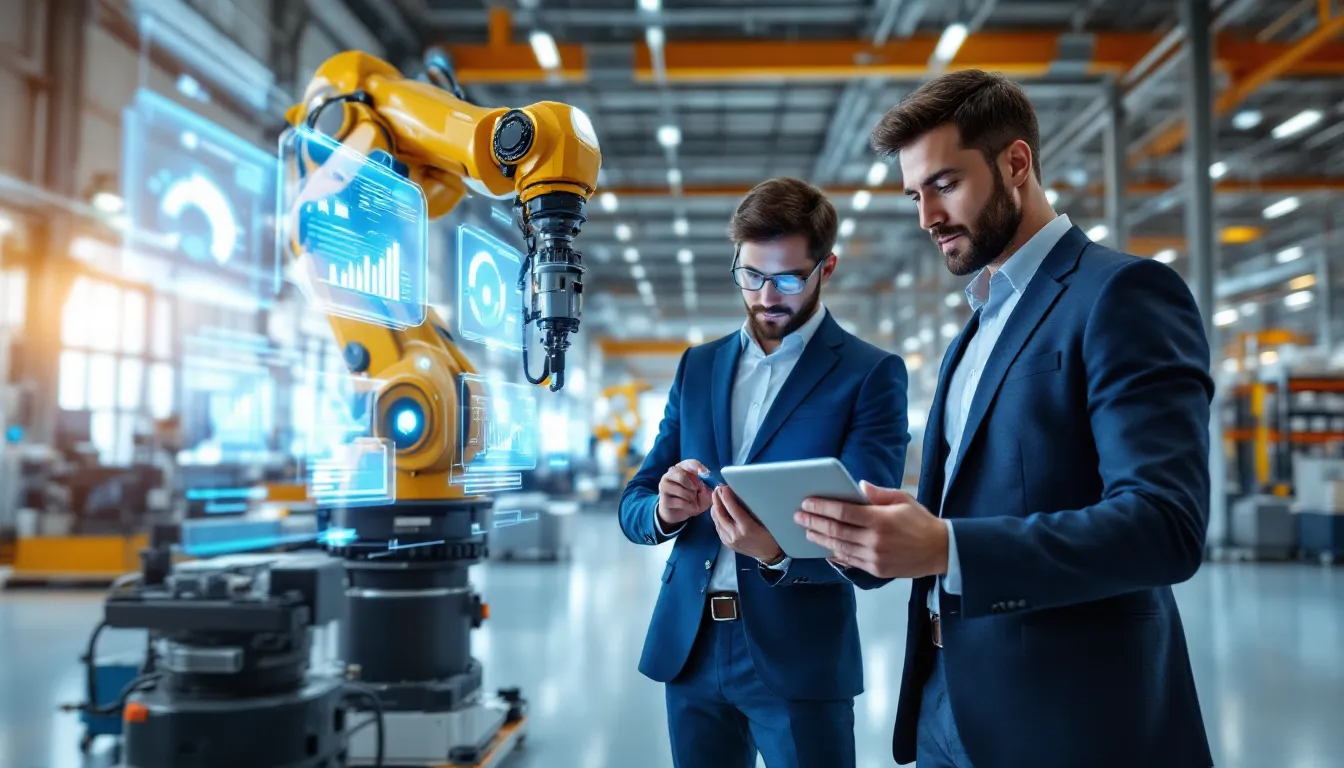
Manufacturing has always been at the forefront of technological evolution, from the steam engine to assembly lines to computerized systems. Now, we’re witnessing something even more transformative: the integration of artificial intelligence into every corner of the factory floor.
AI isn’t just another incremental improvement. It’s fundamentally changing how we design, produce, and deliver products at scale. We’re talking about systems that predict equipment failures before they happen, robots that learn from their mistakes, and supply chains that optimize themselves in real-time. The companies embracing these technologies aren’t just improving efficiency by a few percentage points, they’re completely reimagining what’s possible in manufacturing.
For business leaders exploring AI integration, the question isn’t whether to adopt these technologies anymore. It’s how quickly you can carry out them before your competitors do. Let’s explore how AI is reshaping manufacturing and what it means for your operations.
How AI Is Transforming Modern Manufacturing

The factory floor of 2025 looks radically different from even five years ago. AI has moved from experimental pilot projects to mission-critical infrastructure that powers daily operations.
We’re seeing manufacturers use AI to create what industry experts call “cognitive factories”, production environments where machines don’t just follow programmed instructions but actually learn, adapt, and make intelligent decisions. These systems analyze thousands of data points per second, spotting patterns that human operators could never detect.
The transformation touches every aspect of manufacturing. Production lines adjust themselves based on demand forecasts. Quality control systems catch defects invisible to the human eye. Warehouse robots coordinate their movements like a choreographed dance. Energy consumption optimizes itself based on production schedules and electricity pricing.
What makes this revolution different from previous automation waves is the intelligence behind it. Traditional automation replaced manual labor with machines that did the same task repeatedly. AI-powered systems continuously improve, adapting to new conditions and optimizing processes without human intervention.
The numbers tell the story: manufacturers implementing AI report productivity gains of 20-30%, quality improvements of up to 35%, and maintenance cost reductions exceeding 25%. These aren’t marginal improvements, they’re competitive advantages that separate industry leaders from those struggling to keep pace.
Key AI Technologies Reshaping the Factory Floor
Machine Learning and Predictive Analytics
Machine learning forms the backbone of most AI applications in manufacturing. These algorithms digest historical production data, sensor readings, and operational metrics to identify patterns and make predictions.
We’ve watched predictive analytics transform maintenance strategies across industries. Instead of following fixed maintenance schedules or waiting for equipment to fail, manufacturers now predict exactly when a component will need service. The system might notice that a motor’s vibration pattern has shifted slightly, a change imperceptible to human technicians but a clear warning sign to the AI.
This technology extends far beyond maintenance. Machine learning models forecast demand with unprecedented accuracy, optimize production schedules based on dozens of variables, and even predict which products will have quality issues before they’re manufactured. One automotive manufacturer we know reduced scrap rates by 18% simply by identifying which raw material batches would cause problems during production.
Computer Vision and Quality Control
Computer vision has revolutionized how we think about quality assurance. AI-powered cameras can inspect hundreds of products per minute, detecting defects as small as a fraction of a millimeter. These systems don’t get tired, don’t lose focus, and don’t let a bad product slip through because it’s the end of a long shift.
But the applications go beyond simple pass-fail inspections. Modern computer vision systems understand context. They can distinguish between cosmetic issues that don’t affect function and critical defects that require immediate action. They learn what “normal” looks like for each product variant and flag anything unusual.
We’re also seeing computer vision deployed for safety monitoring, tracking work-in-progress inventory, and even reading analog gauges on legacy equipment that wasn’t designed for digital integration. It’s like giving your factory a set of intelligent eyes that never stop watching and learning.
Robotics and Automation
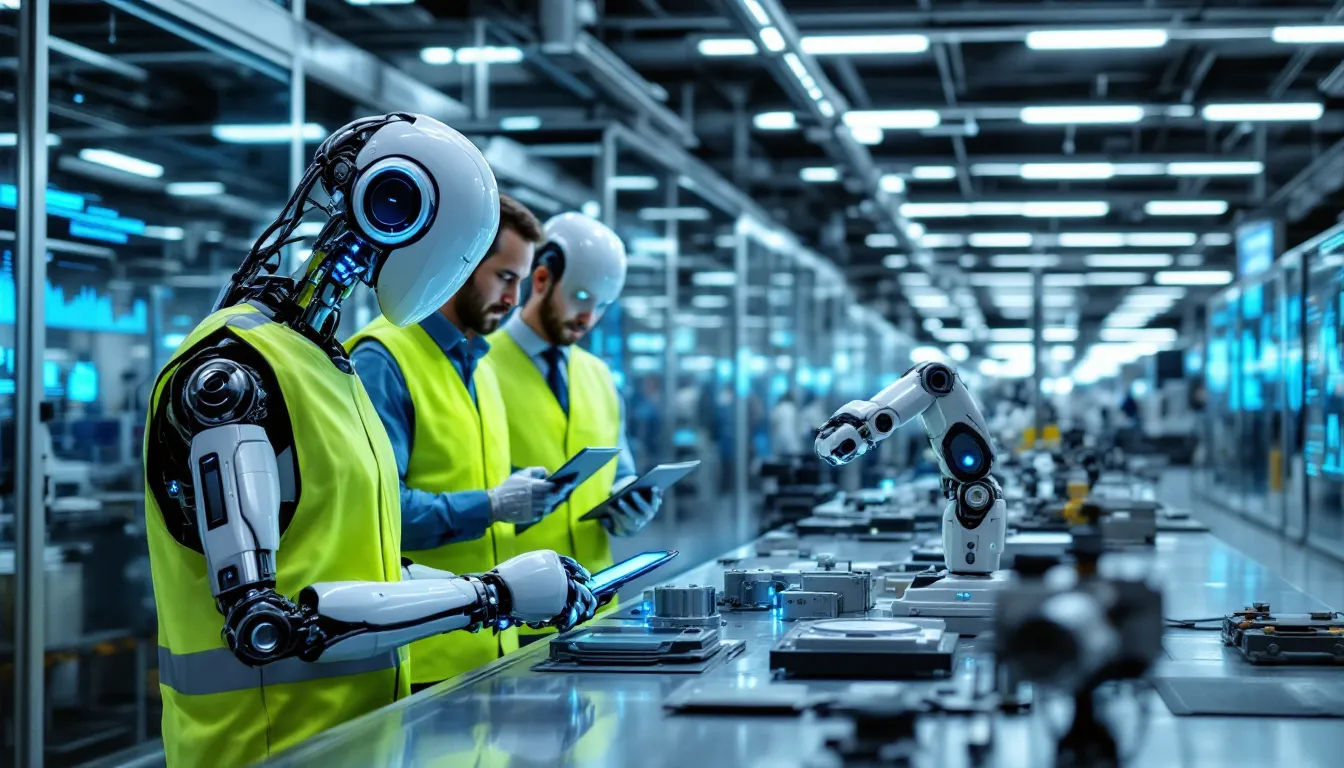
AI has transformed industrial robots from rigid, programmed machines into adaptive, collaborative systems. Today’s AI-powered robots can work safely alongside human employees, learning from demonstration rather than requiring complex programming.
Collaborative robots, or “cobots”, equipped with AI can handle variable tasks that would have required human dexterity just a few years ago. They adjust their grip based on the object they’re handling, navigate dynamic environments without fixed guidance systems, and even recognize when they’ve made a mistake and correct it.
The integration of AI with robotics has opened manufacturing possibilities that seemed like science fiction not long ago. We’re seeing robots that assemble custom products with the same efficiency as mass-produced items, autonomous vehicles that manage warehouse logistics, and robotic systems that perform quality inspections while simultaneously handling materials.
Real-World Applications of AI in Manufacturing
Predictive Maintenance to Reduce Downtime
Unplanned downtime costs manufacturers an estimated $50 billion annually. AI-driven predictive maintenance is changing that equation dramatically.
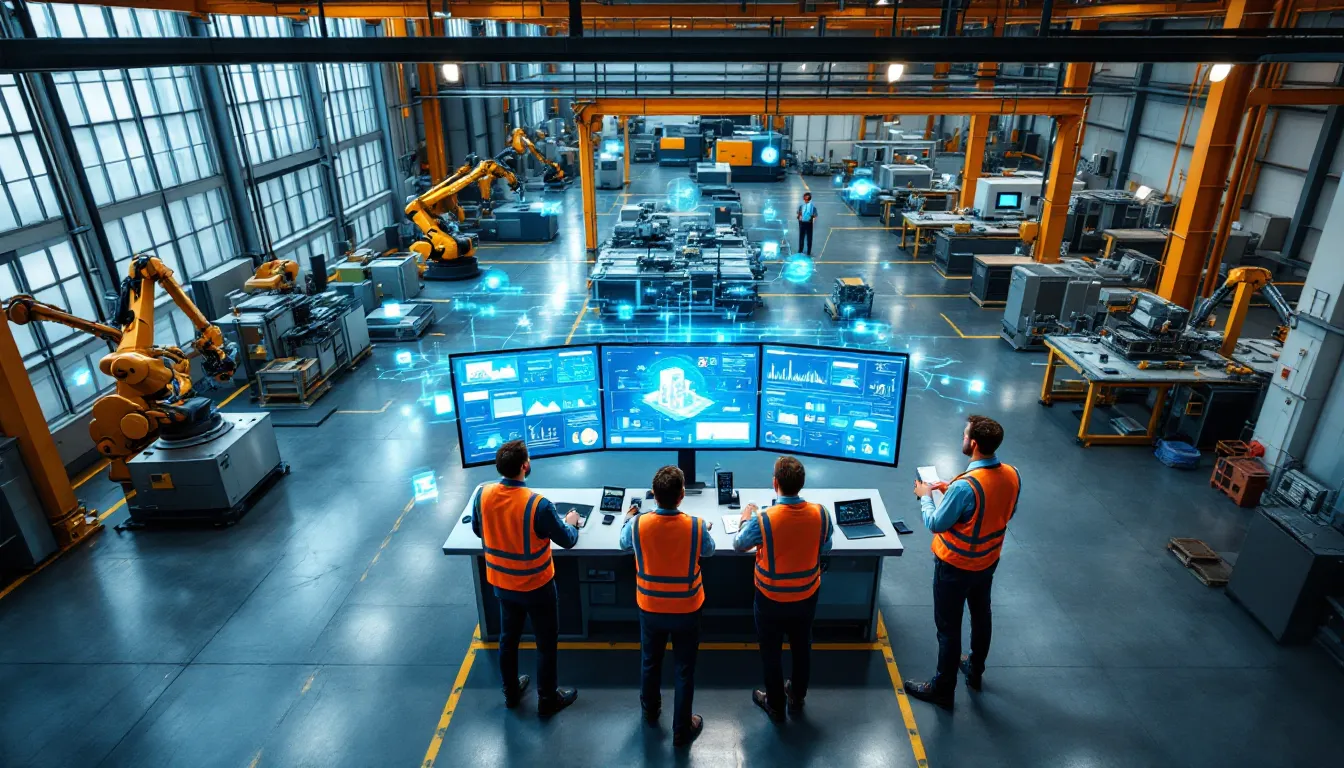
Consider how a major aerospace manufacturer implemented predictive maintenance across their machining operations. Sensors monitor everything from temperature and vibration to power consumption and acoustic signatures. The AI analyzes this data stream continuously, learning the unique “signature” of each machine operating in healthy condition.
When the system detects anomalies, a slight increase in vibration, an unexpected power draw, or an unusual acoustic pattern, it alerts maintenance teams days or weeks before a failure would occur. The result? They reduced unplanned downtime by 40% and extended equipment life by scheduling maintenance during planned production breaks rather than dealing with emergency repairs.
Supply Chain Optimization and Demand Forecasting
Supply chain management has become infinitely more complex in our globalized economy. AI gives manufacturers the ability to navigate this complexity with confidence.
We’ve seen AI systems that analyze hundreds of variables simultaneously, historical sales data, economic indicators, weather patterns, social media trends, competitor activities, and even shipping container movements, to forecast demand with remarkable accuracy. One consumer electronics manufacturer improved their forecast accuracy from 65% to 92% after implementing AI-driven demand planning.
But forecasting is just the beginning. AI optimizes entire supply chains in real-time, automatically adjusting production schedules when suppliers face delays, rerouting shipments to avoid disruptions, and rebalancing inventory across distribution centers based on predicted regional demand. It’s like having a genius logistics coordinator who never sleeps and can see around corners.
Enhanced Product Design and Development
Generative AI is transforming product development in ways that still surprise us. Engineers describe their requirements, strength, weight, material constraints, manufacturing methods, and AI generates dozens or hundreds of design options that meet those specifications.
These aren’t just variations on existing designs. AI explores design spaces that human engineers might never consider, creating forms optimized for performance rather than constrained by traditional thinking. We’ve seen aerospace components that are 40% lighter than conventionally designed parts while maintaining the same strength, and industrial tools that perform better while using less material.
AI also accelerates the testing and refinement process. Instead of building physical prototypes for every iteration, manufacturers use AI-powered simulation to test thousands of variations virtually. Only the most promising designs move to physical prototyping, dramatically reducing development time and costs.
Business Benefits of AI Integration in Manufacturing
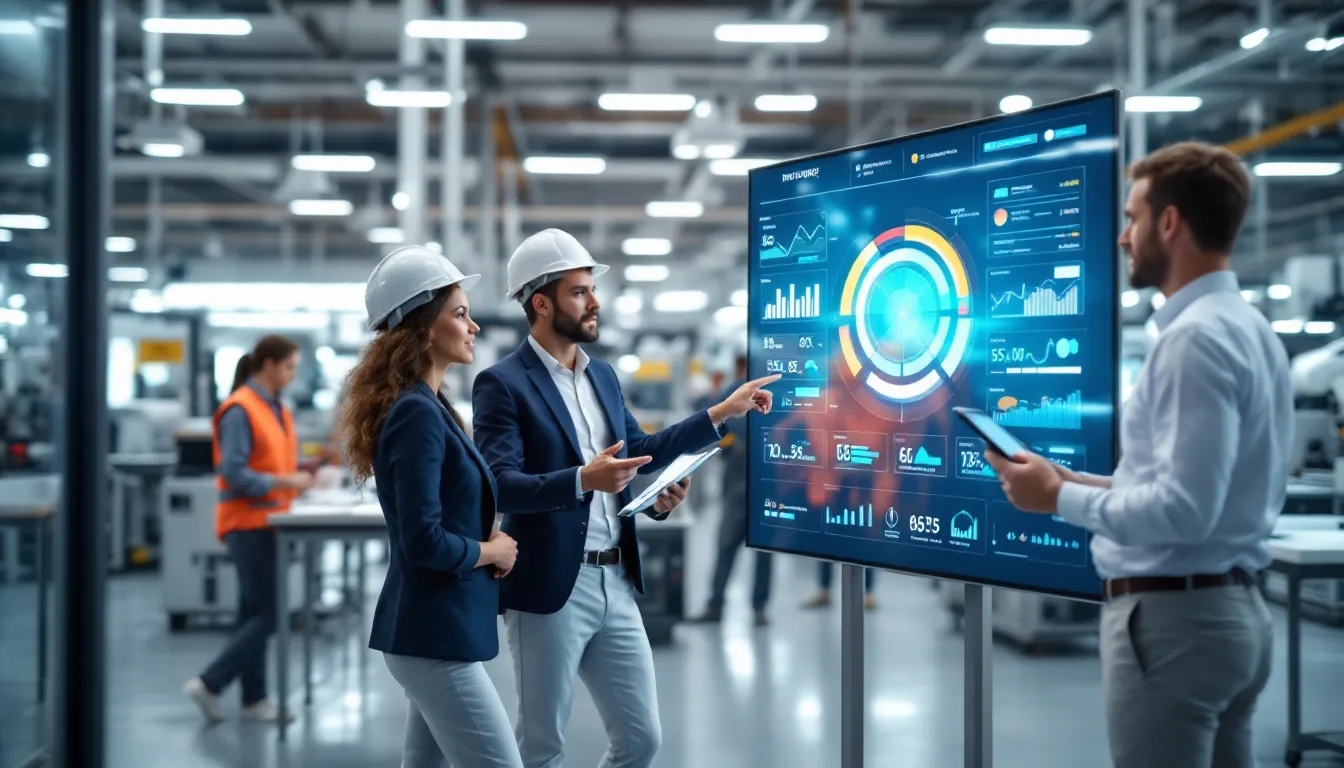
The business case for AI in manufacturing has moved from theoretical to proven. We’re tracking measurable impacts across every operational metric that matters.
Operational efficiency gains represent the most immediate benefit. Manufacturers implementing AI-driven process optimization typically see productivity increases of 20-35%. Production lines run faster with fewer stoppages. Material waste drops by 15-25%. Energy consumption decreases by 10-20% as systems optimize power usage.
Quality improvements directly impact the bottom line. Reduced defect rates mean less scrap, fewer returns, and stronger brand reputation. One medical device manufacturer we work with reduced their defect rate from 3.2% to 0.4% after implementing AI-powered quality control, a change that saved them millions annually and strengthened relationships with healthcare providers.
Cost reduction comes from multiple sources. Predictive maintenance slashes emergency repair costs and extends equipment life. Optimized production schedules reduce overtime and inventory carrying costs. Better demand forecasting minimizes both stockouts and excess inventory. When you add it all up, manufacturers commonly achieve 15-30% operational cost reductions within the first two years.
Speed and agility have become competitive differentiators in fast-moving markets. AI enables rapid changeovers between product variants, quick responses to demand shifts, and faster product development cycles. Companies can offer mass customization with the efficiency of mass production.
Perhaps most importantly, AI creates capacity for innovation. When systems handle routine optimization and monitoring, your engineering and management talent can focus on strategic initiatives rather than firefighting operational issues. It’s about freeing human creativity to solve the problems that actually require human insight.
Implementation Challenges and How to Overcome Them
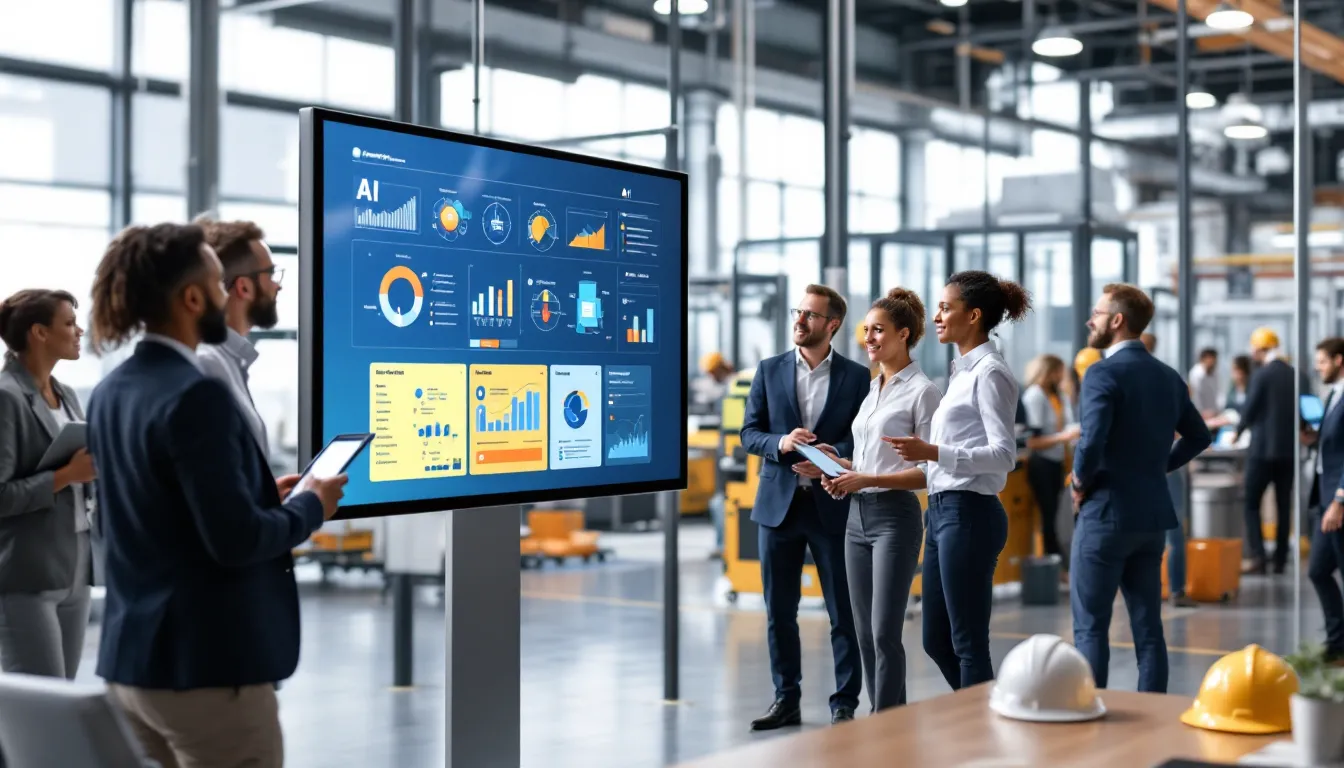
Let’s be honest, implementing AI in manufacturing isn’t plug-and-play. We’ve seen companies stumble, and we’ve learned what separates successful implementations from expensive false starts.
Data quality and availability pose the first hurdle. AI systems need data to learn, but many manufacturers discover their data is siloed, inconsistent, or incomplete. Legacy equipment might not have sensors. Different systems might use incompatible formats. Production data might be recorded manually with human error mixed in.
The solution isn’t waiting for perfect data, it’s starting with what you have and improving incrementally. We recommend beginning with well-documented processes that already generate good data, proving AI’s value, then expanding to areas requiring data infrastructure improvements.
Integration with legacy systems challenges even the most tech-savvy manufacturers. You can’t just rip out equipment that cost millions and still has decades of useful life. Successful AI implementation requires bridging old and new, often using IoT sensors to digitize analog equipment and middleware to connect incompatible systems.
Skills gaps represent another significant barrier. Your existing workforce might not include data scientists or AI specialists. But here’s what we’ve learned: you don’t need to transform your entire team into AI experts. You need a few specialists who understand both AI and manufacturing, plus training for your existing staff on working alongside AI systems.
Change management often determines whether AI projects succeed or fail. Workers worry AI will eliminate jobs. Middle managers resist changes to processes they’ve perfected over years. Executives expect immediate ROI without understanding that AI systems improve over time.
We’ve found that transparency and inclusion make all the difference. Involve employees in AI implementation from the beginning. Show them how AI handles tedious tasks and empowers them to focus on work that requires human judgment. Celebrate early wins and share the benefits broadly.
Investment concerns are valid, AI implementation requires capital and ongoing resources. But we encourage leaders to think beyond traditional ROI calculations. Consider competitive position, capability building, and long-term resilience. The question isn’t whether you can afford to carry out AI: it’s whether you can afford not to while competitors surge ahead.
Getting Started: Steps for AI Adoption in Your Manufacturing Operations
We’ve guided dozens of manufacturers through AI adoption. The successful ones follow a clear, pragmatic path.
Start with a clear business problem, not a technology solution. Don’t carry out AI because it’s trendy. Identify specific pain points, excessive downtime, quality issues, supply chain disruptions, where AI can deliver measurable impact. This focus ensures your AI investment solves real problems and generates tangible returns.
Conduct a data and technology audit. Assess what data you’re currently collecting, where gaps exist, and which systems need integration or upgrading. This honest evaluation prevents surprises mid-implementation and helps you budget realistically.
Begin with a pilot project in a contained area where you can demonstrate value quickly. Choose something important enough to matter but limited enough to manage. Maybe it’s predictive maintenance on a critical production line or quality control for your highest-value product. Prove the concept, learn from the experience, then scale.
Build your team strategically. You’ll need a blend of AI expertise and manufacturing knowledge. Many companies successfully partner with AI consultants initially while developing internal capabilities. The key is ensuring someone on your team deeply understands both the technology and your specific manufacturing environment.
Invest in infrastructure and integration. This might mean adding sensors to equipment, upgrading network capabilities, or implementing data platforms that consolidate information from multiple sources. These foundational investments enable not just your first AI project but future initiatives.
Plan for continuous improvement. AI systems get smarter over time as they process more data and receive feedback. Build mechanisms for monitoring performance, gathering user input, and refining models. The manufacturers seeing the biggest gains treat AI as a capability they continuously develop, not a project they complete.
Focus on adoption and change management from day one. The most sophisticated AI system fails if people don’t trust it or use it properly. Communicate clearly about what AI will and won’t do. Train thoroughly. Create champions who can help their colleagues adapt.
At BeyondImagination.ai, we help enterprises design and deploy AI strategies that turn innovation into measurable business growth. We’ve walked this path with manufacturers across industries, and we understand both the technical complexities and the organizational challenges you’ll face.
Conclusion
The manufacturing landscape is shifting beneath our feet. AI isn’t coming to transform the industry, it’s already here, already delivering competitive advantages to companies bold enough to embrace it.
We’ve moved past the experimental phase. The technologies work. The business cases are proven. The question facing manufacturing leaders isn’t whether AI will reshape your industry, but whether you’ll lead that transformation or scramble to catch up.
The manufacturers thriving in this new era share a common trait: they’re treating AI adoption as a strategic imperative, not a technical project. They’re investing in capabilities, not just tools. They’re preparing their organizations for continuous evolution, not one-time change.
Your competitors are already exploring these technologies. Some are already implementing them. The gap between AI leaders and laggards will widen quickly, creating advantages that become harder to overcome with each passing quarter.
But here’s the good news: it’s not too late to start. With the right strategy, partners, and commitment, you can carry out AI systems that transform your operations within months, not years.
Ready to build your digital future and power your own industrial revolution? Let’s make it happen together. Contact us at BeyondImagination.ai to explore how AI can transform your manufacturing operations.
Frequently Asked Questions
How is AI transforming modern manufacturing operations?
AI is creating cognitive factories where machines learn, adapt, and make intelligent decisions. Systems analyze thousands of data points per second, enabling production lines to self-adjust, quality control to catch invisible defects, and processes to optimize without human intervention, delivering 20-30% productivity gains.
What is predictive maintenance in AI manufacturing?
Predictive maintenance uses AI to analyze sensor data from equipment—vibration, temperature, power consumption—to predict failures before they occur. This approach reduces unplanned downtime by up to 40%, allowing manufacturers to schedule maintenance during planned breaks rather than facing emergency repairs.
Can small and medium manufacturers afford AI implementation?
Yes, AI adoption doesn’t require massive upfront investment. Manufacturers can start with focused pilot projects in specific areas like quality control or maintenance, prove value quickly, then scale gradually. Many partner with AI consultants initially while building internal capabilities cost-effectively.
What are the main challenges of implementing AI in manufacturing?
Key challenges include data quality issues, integration with legacy equipment, skills gaps, and workforce resistance. Success requires starting with available data, using IoT sensors to digitize analog equipment, training existing staff, and involving employees early to build trust and adoption.
How does AI improve supply chain management in manufacturing?
AI analyzes hundreds of variables simultaneously—sales data, economic indicators, weather, social media trends—to forecast demand with 90%+ accuracy. Systems then optimize supply chains in real-time, automatically adjusting production schedules, rerouting shipments, and rebalancing inventory to avoid disruptions.
Will AI replace human workers in manufacturing jobs?
AI primarily handles repetitive monitoring and optimization tasks, freeing human workers for strategic problem-solving and creative work requiring judgment. Successful implementations focus on human-AI collaboration, with cobots working safely alongside employees and AI empowering workers rather than replacing them.